Who are God's people, really? This study traces that question from Genesis to Revelation, in the order the story actually unfolds, testing a working hypothesis against every book of the canon rather than a handful of familiar proof texts. Along the way it checks the ESV against the Hebrew and Greek text, the Septuagint, and the Dead Sea Scrolls wherever the original language changes the picture.
Scripture’s deepest recurring problem isn’t a lack of information — it’s forgetfulness. Not simply forgetting facts, but forgetting to trust: letting pride, self-reliance, or the voice of another quietly displace what we already know to be true about God. From Adam in the garden to Israel at the golden calf to believers today, the pattern repeats. But so does God’s answer to it.
What a Faithful Ekklesia Looks Like in Practice Today
What would a church look like if you set aside institutional tradition, cultural accommodation, and modern invention — and asked only what Scripture commands and what the earliest Christians actually practiced?
Doctrine, Practice, and Cultural Transmission from the Apostolic Age to the American Church
Most Christians assume the practices of the modern church are ancient. Many are not — and the ones that aren’t often come with a corporate paper trail.
Most churches assume the group retreat and the pastoral sabbatical are simply “biblical rest, applied.” This paper tests that assumption against the text — and finds the connection much thinner than commonly claimed.
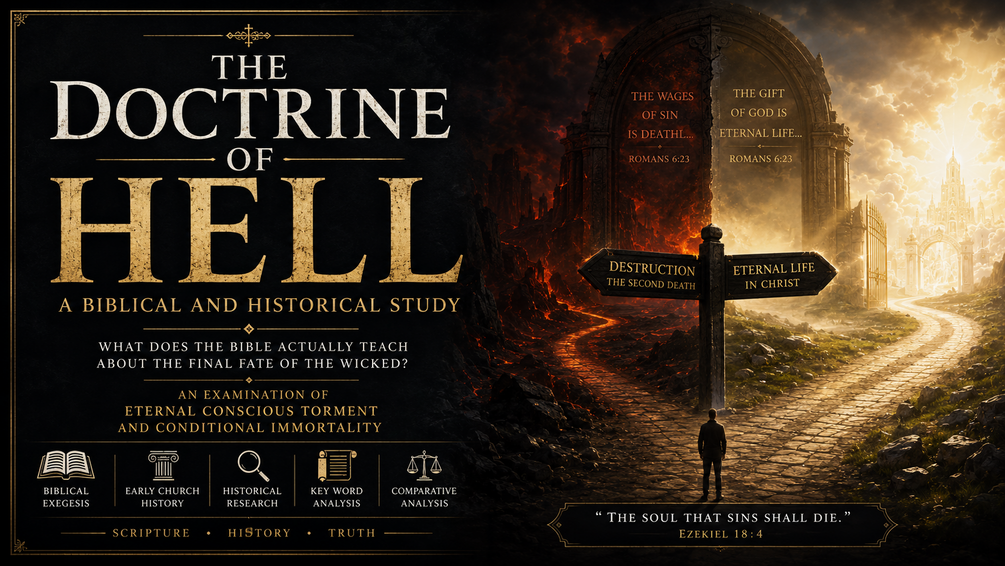
The Doctrine of Hell: A Biblical and Historical Study is a deep, Scripture-centered examination of one of Christianity’s most debated doctrines: the final fate of the wicked. Drawing from both Old and New Testament passages, early church writings, historical theology, and linguistic analysis, this study explores the competing views of Eternal Conscious Torment and Conditional Immortality. Rather than relying on tradition alone, the document carefully traces how concepts such as death, destruction, immortality, judgment, Gehenna, Hades, and the “second death” are used throughout the biblical narrative. The study also investigates how Greek philosophy, Jewish apocalyptic literature, and later theological developments influenced Christian understandings of hell over time. Written with clarity, humility, and extensive textual engagement, this work is designed for readers seeking a serious and thoughtful exploration of biblical eschatology.
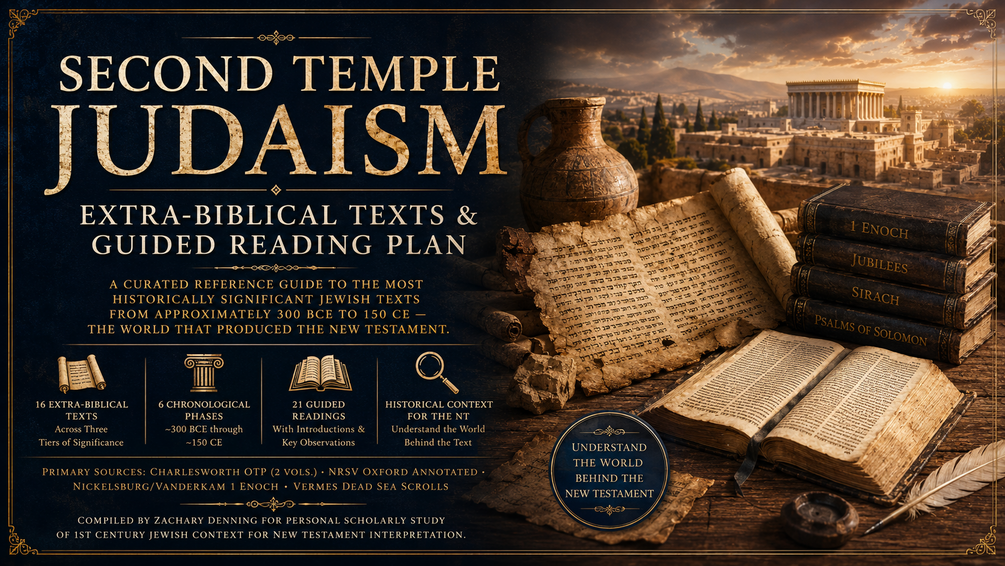
Second Temple Judaism: Extra-Biblical Texts & Guided Reading Plan is a carefully curated study guide designed to introduce readers to the most influential Jewish writings surrounding the world of the New Testament. Covering key texts from approximately 300 BCE to 150 CE, the guide explores the historical, theological, and cultural landscape that shaped early Judaism and the rise of Christianity. Organized into six chronological reading phases, the study moves through the Maccabean crisis, apocalyptic literature, the Dead Sea Scrolls, diaspora Judaism, and post-Temple Jewish thought. Each section includes historical introductions, guided observations, thematic notes, and recommendations for further reading, making complex material accessible without sacrificing scholarly depth. Featuring texts such as 1 Enoch, Jubilees, Wisdom of Solomon, Psalms of Solomon, 4 Ezra, and the Dead Sea Scrolls, this guide helps readers understand the intellectual world behind the New Testament. Designed for serious students, pastors, researchers, and independent learners, it provides a structured pathway into one of the most important periods in biblical history.